

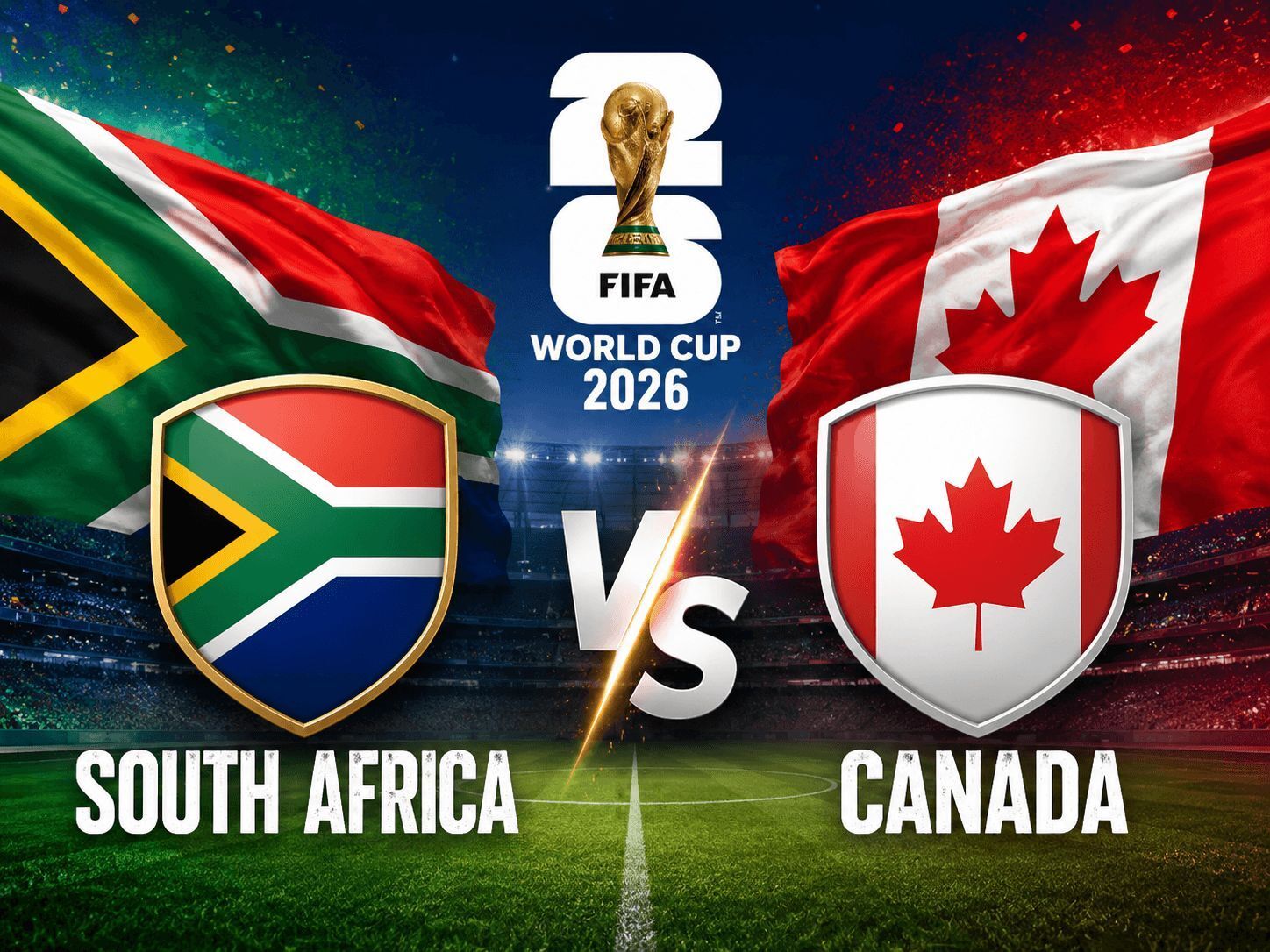
How South Africa approaches the match
Hugo Broos has built something disciplined. South Africa came through Group A with one win, one draw and one loss, scoring just twice and conceding three. The defining moment was Thapelo Maseko’s 63rd-minute finish against South Korea, a goal born of a slipped pass from Tshepang Moremi and a direct run into space. That is the blueprint: sit deep, protect central zones, win duels and strike on transition.
The numbers underline the profile. Across the group, South Africa managed 33 shots and 10 on target, but their 1.1 xG against South Korea tells you this is a low-event team. The big absence is Themba Zwane, suspended after FIFA rejected the appeal, which thins their already modest creativity. Ronwen Williams in goal and Teboho Mokoena in midfield anchor the resistance. The plan is obvious and honest: stay compact, attack the space behind Canada’s full-backs, and never chase the game early.
How Canada approaches the match
Jesse Marsch wants speed, aggression and vertical football, and against weaker opposition it sings. The 6-0 dismantling of Qatar produced 32 shots, 4.46 xG and a goalkeeper barely touched. Across three games Canada racked up 58 shots, 21 on target and 35 corners, with Jonathan David, Cyle Larin and Promise David offering genuine finishing.
The worries are real, though. Ismaël Koné is out for the tournament after leg surgery, removing midfield balance, and Alphonso Davies remains a hamstring question mark despite Marsch suggesting he plays next. Marsch himself admitted his players turn cautious in big moments, and that hesitancy surfaced against Switzerland. Canada’s depth, with Nathan Saliba and Stephen Eustaquio, gives them stamina for a long night, but they must break the block before this drifts into an underdog script.
What happens if the match is tied after 90 minutes
If level after ninety, we go to two 15-minute periods of extra time, and then a penalty shootout if still unresolved. Here the variables shift. South Africa’s deep, duel-heavy approach can survive into the later stages, and Ronwen Williams is the type of goalkeeper who thrives in a shootout.
Canada have superior bench quality and athletic reserves, which matters across 120 minutes, but fatigue plus the Koné absence could fray their structure. South Africa would happily drag this into the lottery.
Match prediction and the team that will advance
I expect Canada to dominate territory, possession and shot count while South Africa defend deep and hunt one transition or set-piece. Reading the probabilities, I lean Canada win around 54%, draw 22%, South Africa 24%.
The quality gap favours Canada, so the main pick is Canada to win at 7/10 to 3/4. Given South Africa’s low-scoring profile and the knockout tension, Under 2.5 goals at around -149 looks like the cleaner value, since none of South Africa’s three group games cleared that line. My probable score is 0-1 Canada after ninety, with a meaningful chance of extra time given the underdog’s resilience. Ultimately I back Canada to advance, even if the night demands patience rather than fireworks.